The first bassoon undoubtedly sucked.
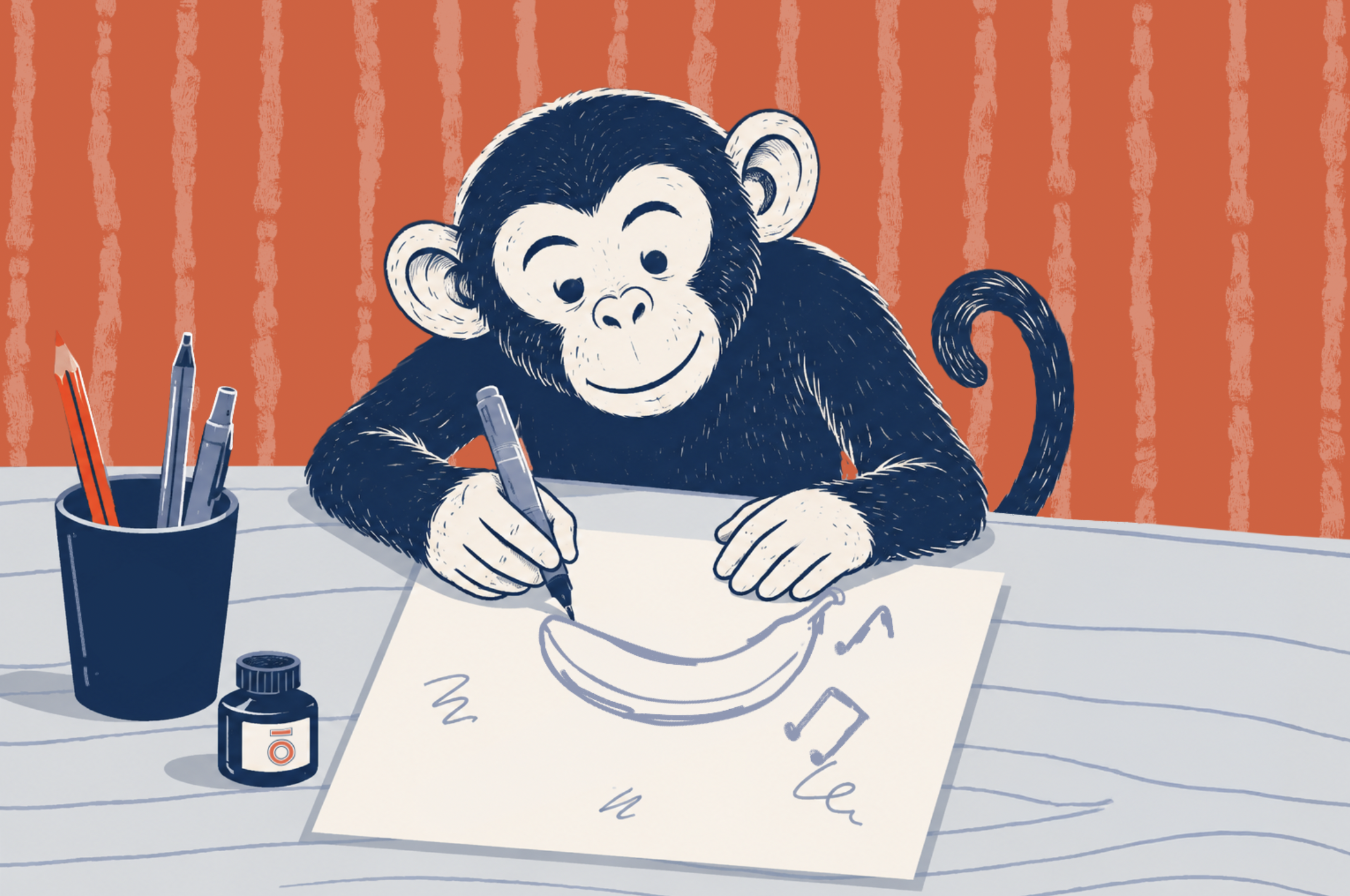
Illustration by: Jenna Dahlke and Kate Segler
The other night I found myself in The Excelsior Commons at a free concert. Actually, Ostrom Creative helped sponsor the event; it’s called Fanfare for the Commons… but this isn't a rant about philanthropy. It's a rant about bassoons.
As I sat overlooking Lake Minnetonka listening to the Minnesota Orchestra, I found myself getting lost in the sound. Strings. Brass. Woodwinds. Percussion. Dozens of completely different instruments somehow working together to create something impossibly rich and impossibly human.
We're such clever monkeys.
Then my mind wandered. Somebody had to invent all those instruments. Not improve them… invent them. The first percussion instruments probably came together pretty quickly. Beating stuff with sticks is a natural thing to do even for remedial monkeys. Congratulations. You've created rhythm. But everything after that? The first harp. The first oboe. The first French horn. The first bassoon? Good Lord.
There it was, towering above the clarinets toward the back of the woodwinds. It got me thinking. Imagine spending months carving wood by hand, drilling holes, bending brass, stretching strings… only to produce something that sounded like a startled goose trapped inside an angry raccoon stuffed into a burlap sack full of kittens.
"Gentlemen... I give you the bassoon."
Then I started thinking about the reed. Yea, my mind works exactly like this. But, think about the reed for a second. Without it, no woodwinds. Who looked at a piece of river cane and thought, "I bet if I shave this down until it's paper thin, soak it in water, tie it to a stick and blow on it... music." That's a very specific kind of optimist. Probably the same person who looked at an oyster and thought, "You know what? I'm eating that." I am eternally appreciative of their courage… and their ability to drown out the haters.
After the first performance, nobody said, "Yep, you've nailed it!" The guy got back to work… and it didn’t stop there. Generation after generation. Somebody changed the curve. Somebody moved a hole. Somebody shortened a reed. Somebody failed a thousand tiny times until, centuries later, an orchestra could move an audience to tears on a summer evening overlooking Lake Minnetonka.
Somewhere along the way we forgot that's how good things happen.
Today we expect the first draft to be the final draft. The first logo. The layout. The first idea. We don't call them concepts anymore, we call them deliverables. Then we wonder why everything feels so... finished. Not polished. Finished. Like it never had permission to be awkward before it became beautiful. Sad.
Real creativity isn't magic, it's exploration, and sometimes exploration hits a dead end. At Ostrom Creative, we're okay with that. In fact, we insist on it. Because a creative dead end usually means you're somewhere new. You're not polishing last year's idea. You're wandering into territory where nobody has left footprints yet. Not every path leads somewhere interesting… some end in a swamp. Some lead straight off a cliff. Some produce a bassoon that sounds like the aforementioned menagerie.
Good. That's the price of discovery. Creative dead ends are proof you weren't following someone else's map.
The real danger isn't failure. It's spending your entire career refining ideas that everyone already agrees with. The first bassoon wasn't trying to become part of the Minnesota Orchestra. It was just trying to become a bassoon. Somewhere in your business… in your notebook or on a sketch pad… there's an ugly first draft waiting for another chance.
Keep working on it.
— Tom
Free thinking for hire™